


Buy Rock Tumbler Grits
<With Redirects to Amazon and eBay>
The Stone circle sell lapidary material and the occasional rock tumbler grit. Although we can list these below, they will not give you the full range of products we advise you to use with your rock tumbler. Instead, we have a bunch of Amazon and eBay links related to products we have used before or that we approve of according to what we know about the rock polishing business.
Recommended Rock Tumbler Grits

Fans of the Stone Circle will know how much respect we have for National Geographic products. This 4 step bulk batch will last you for ages, should you get the 1.49kg lot. We will link a few similar items that they sell in different sizes so make sure you read the product descriptions to order the right one.
Most new rock tumbler users start on a version of this Blur Marble grit. There is a rough, a semi-rough, a smooth and a polish. I can't find exactly what the grits are but usually it is:
-
Stage 1 60/80/90 grit
-
Stage 2 220 grit
-
Stage 3 400/600 grit
-
Stage 4 polishing powder/1000+
Lapidary Materials


Rough Rocks


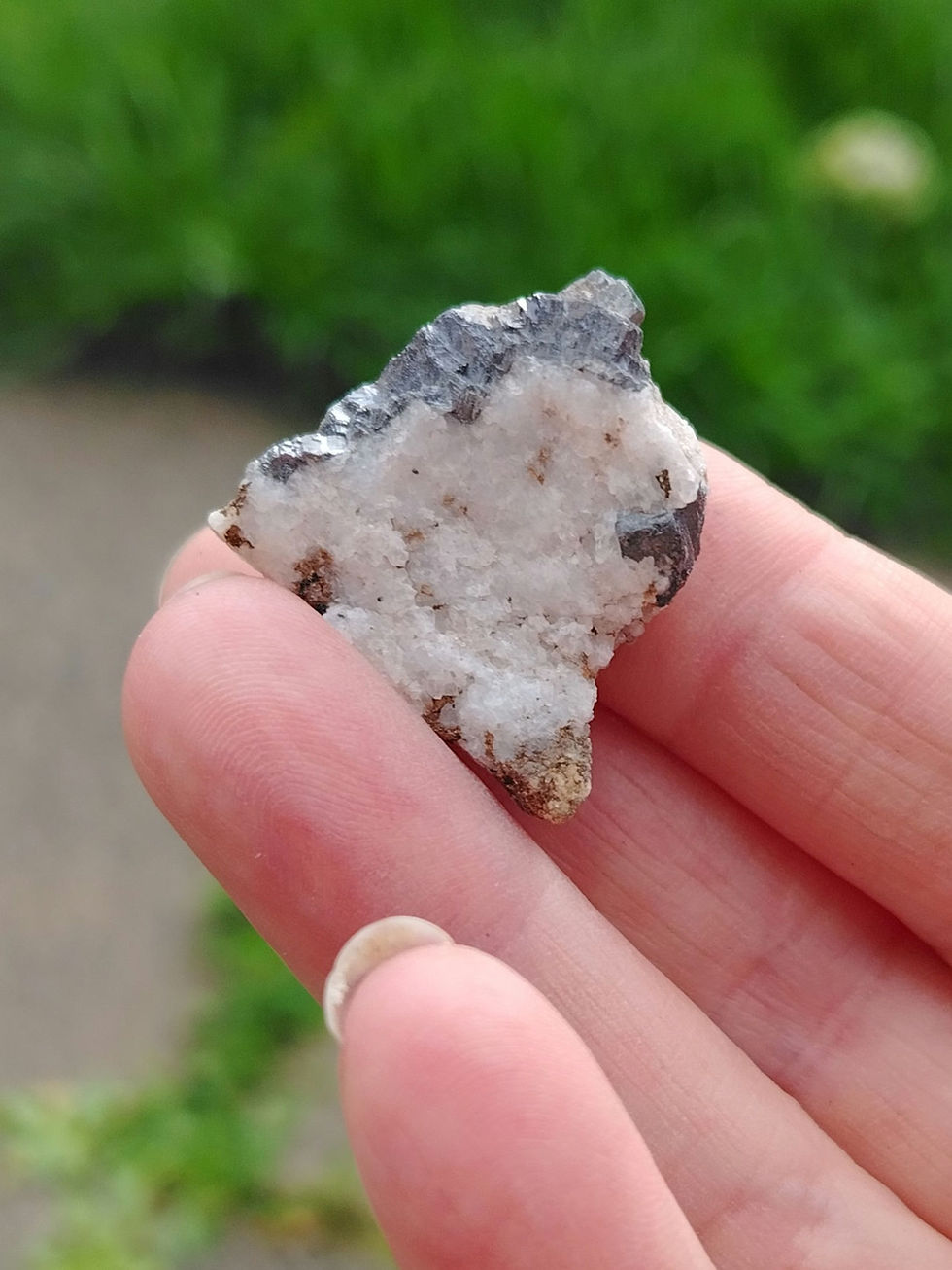


Are Silicon Carbide and Carborundum the Same Thing?

Yes! Silica or silicon carbide has the same chemical makeup as the man made mineral Carborundum.
The picture to the left shows what silica carbide grit looks like in mineral form, before it is broken down into sandpaper grits.
While Carborundum does occur very rarely in nature (as mossianite) it has been mass produced since around 1893 as silica carbide grit, crystals, and powders. These are used as industrial abrasives.
Why Carborundum? After the powder was invented by American scientist Edward Goodrich Acheson in 1891, Carborundum was the trade name he used.
What is Rock Tumbler Grit Made Of?
The medium we use in a rock tumbler is called silica carbide grit. This is a man made abrasive material. Grit can also be made from Aluminium oxide. Think of it as the same material used to make sandpaper rough.
These grits are perfectly sized and shaped to do the job.
What Can I Use in My Rock Tumbler?
Although it is possible to create seaglass using sand and water, sand, sugar, and salt substitues for rock tumbling grits simply don't have the hardness to slowly erode and polish your rocks.
Stick to rock tumbling grit made from silica carbide or aluminium oxide for best rock tumbling results.